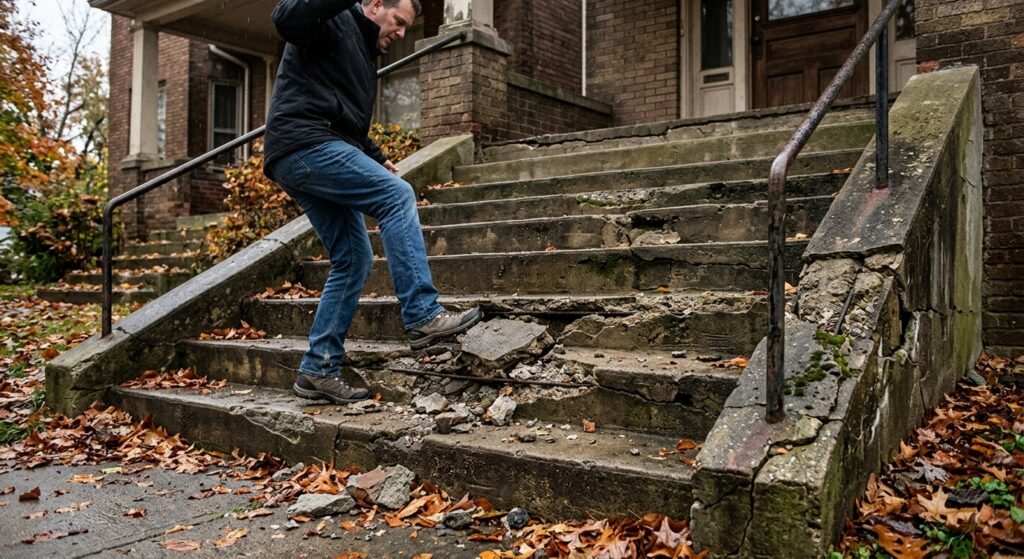
The Hidden Safety Risks of Cracked or Crumbling Concrete Steps
Cracked concrete steps look like a small cosmetic flaw, but they often signal a larger safety problem. In short: cracked or crumbling concrete steps can shift, break apart, and cause serious falls. Fixing them early protects your family, your guests, and your budget.
If you searched for answers about damaged steps, you likely want to know three things: how dangerous the damage is, what causes it, and how to fix it. This guide covers all three, so you can decide your next step with confidence.
Why Cracked Concrete Steps Deserve Your Attention
Concrete feels permanent, so many homeowners assume it will last forever. However, weather, moisture, soil movement, and daily foot traffic slowly wear it down. As a result, a hairline crack today can become a crumbling edge next season.
Moreover, steps carry more stress than a flat driveway or patio. Every footfall lands on a narrow edge, and every edge takes the most abuse. Therefore, even minor damage on a stair deserves a closer look.
The Hidden Safety Risks of Damaged Concrete Steps
Trip and Fall Hazards
Uneven treads and raised edges catch toes and heels. In addition, loose chips create slippery spots, especially when wet. Children, older adults, and anyone carrying groceries face the greatest danger. Because a fall on stairs often ends in fractures or head injuries, prevention matters far more than a cleanup after the fact.
Structural Weakness You Cannot See
Surface cracks often hide deeper problems. For example, a step may sit on soil that has washed away, leaving an empty pocket underneath. Meanwhile, rusted reinforcement steel inside the slab expands and pushes the concrete outward. Consequently, a step that looks stable can collapse under sudden weight.
Water Intrusion and Freeze-Thaw Damage
Water seeps into every crack. Then, when temperatures drop, that water freezes, expands, and widens the gap. Over time, this cycle turns thin cracks into deep fractures and flaking surfaces. Furthermore, moisture can travel toward your foundation, which creates repair costs well beyond the steps themselves.
Liability and Insurance Concerns
Visitors, delivery drivers, and neighbors all use your entry. If someone falls on a known defect, you may face medical claims or a dispute with your insurer. Likewise, rental owners and small businesses carry even higher exposure. For these reasons, timely repairs protect your finances as much as your guests.
Accessibility and Everyday Comfort
Damaged steps also limit independence. For instance, a wobbly handrail base or an uneven rise makes stairs harder for anyone with limited mobility. Besides that, damaged steps drag down curb appeal and property value, which matters if you plan to sell.
Warning Signs Your Concrete Steps Need Help Now
Watch for these red flags:
- Cracks wider than a quarter inch, or cracks that keep growing
- Crumbling or flaking edges on treads and risers
- Steps that sink, tilt, or pull away from the house
- Gaps between the steps and the foundation
- Exposed rebar or rust stains on the surface
- Hollow sounds when you tap the concrete
- Standing water that never drains from the landing
If you notice two or more of these signs, schedule a professional inspection soon. Otherwise, the damage will likely spread.
Repair or Replace? What to Expect
Many homeowners fear that damaged steps always mean full replacement. Fortunately, that is not always true. Depending on the cause and severity, a specialist may recommend one of several solutions:
- Crack repair and sealing for stable steps with minor damage
- Resurfacing or overlay to restore worn, flaking treads
- Edge and corner rebuilding for crumbled sections
- Slab lifting or stabilization when the base has settled
- Full replacement when the structure has failed beyond a safe repair
A trained inspector checks the base, the reinforcement, and the drainage before choosing a plan. Because restoration usually costs less than replacement, it often saves both time and money. Still, safety comes first, so a good contractor will tell you honestly when replacement is the better choice.
Why Homeowners Choose Elite Concrete Restoration Inc.
At Elite Concrete Restoration Inc., we treat every set of steps as a safety project first and a beauty project second. Our approach stands out for several reasons:
- Root-cause repairs. We fix the reason your steps failed, not just the visible crack.
- Restoration-first thinking. We save what can be saved, so you avoid unnecessary demolition.
- Clear, honest guidance. We explain your options in plain language, without pressure.
- Durable, slip-resistant finishes. We build steps that look great and grip well in wet weather.
As a result, you get steps that feel solid underfoot and last for years.
Simple Ways to Protect Your Steps Between Repairs
While you wait for a concrete steps inspection, a few habits reduce risk:
- Sweep away debris, leaves, and ice regularly.
- Avoid rock salt and harsh de-icers, since they eat away at the surface.
- Keep gutters and downspouts pointed away from the stairs.
- Mark damaged areas clearly and warn visitors.
- Seal small cracks promptly to block water.
Frequently Asked Questions (FAQs)
Are cracked concrete steps dangerous?
Yes, they can be. Cracks create uneven surfaces, weaken the structure, and let water in. Small hairline cracks are often minor, but wide, growing, or shifting cracks need professional attention.
Can you repair crumbling concrete steps without replacing them?
Often, yes. Resurfacing, patching, and edge rebuilding restore many steps. However, if the base has failed or the slab has sunk severely, replacement may be safer.
What causes concrete steps to crack and crumble?
Common causes include freeze-thaw cycles, poor drainage, soil settlement, de-icing salts, rusting rebar, and age. In addition, heavy loads and poor original installation speed up the damage.
How much does concrete step repair cost?
Costs vary with the size of the damage, the repair method, and access to the site. Generally, early repairs cost far less than full replacement, so acting sooner saves money.
How long do repaired concrete steps last?
With proper preparation, quality materials, and good drainage, repairs can last many years. Regular sealing and cleaning extend that lifespan even further.
When should I call a professional?
Call when cracks widen, steps move, edges crumble, or you see exposed steel. Likewise, call if anyone has tripped on the steps recently.
Make Your Steps Safe Again
Cracked or crumbling steps rarely fix themselves. Instead, they grow worse with every storm, freeze, and footstep. Fortunately, an early inspection often keeps repairs simple and affordable.
Contact Elite Concrete Restoration Inc. today to schedule your concrete step inspection calgary. Our team will assess the damage, explain your options clearly, and restore your steps so your family and guests can walk with confidence.