Concrete Steps Restoration vs. Repair vs. Replacement | Which Does Your Home Need?
Cracked, crumbling, or uneven concrete steps do more than hurt your curb appeal. They also create real safety hazards for your family and guests. So, when your steps start showing wear, you need to decide quickly: should you restore, repair, or fully replace them? Each option carries its own advantages, drawbacks, and price tag, and the right choice depends on your steps’ current condition. Below, we break down all three paths so you can make a confident, informed decision.
First, Assess the Damage
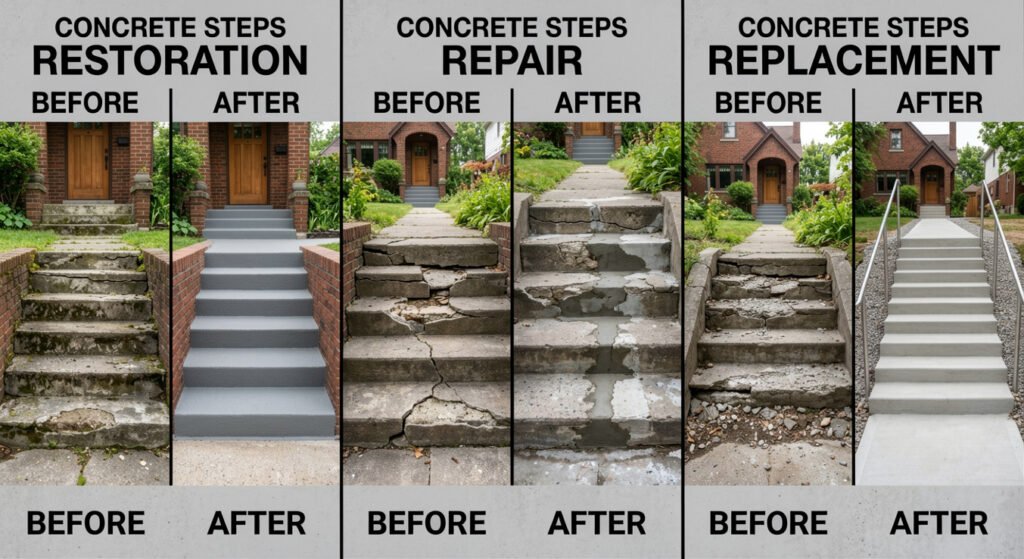
Before choosing a solution, examine your steps closely. Look for hairline cracks, surface flaking (spalling), uneven settling, exposed rebar, or crumbling edges. Consequently, the severity and type of damage will point you toward the right fix. Minor surface issues typically call for restoration, moderate structural problems usually need repair, while severe deterioration often demands full concrete replacement and finishing.
Option 1: Concrete Steps Restoration
Restoration focuses on renewing the surface without altering the step’s underlying structure. Contractors typically use techniques like resurfacing, staining, sealing, or applying a bonding overlay to refresh worn concrete.
Advantages:
- Costs significantly less than replacement
- Takes only one to two days to complete
- Improves appearance while preserving the original structure
- Adds a protective sealant that extends the steps’ lifespan
Disadvantages:
- Doesn’t fix underlying structural problems
- Offers a shorter-term solution if damage runs deep
- May not blend perfectly with surrounding concrete if colors mismatch
Estimated Cost: $3 to $10 per square foot, depending on the technique and finish you choose.
Restoration works best when your steps are structurally sound but look dull, stained, or lightly cracked. As a result, homeowners with cosmetic concerns and a limited budget often start here.
Option 2: Concrete Steps Repair
Repairing broken concrete steps addresses specific problem areas rather than the entire structure. Common repair methods include patching cracks, filling spalled sections, releveling sunken steps with polyurethane foam injection, and rebuilding broken edges or corners.
Advantages:
- Targets only the damaged sections, saving money
- Extends the steps’ usable life by several years
- Prevents small issues from escalating into major structural failures
- Finishes faster than a full replacement project
Disadvantages:
- Patched areas may eventually show slight color or texture differences
- Doesn’t guarantee a permanent fix if the foundation continues shifting
- Repeated repairs over time can eventually cost more than one replacement
Estimated Cost: $200 to $1,500 total, depending on crack size, number of steps, and leveling needs.
Repair suits homeowners whose steps show moderate cracking, minor settling, or isolated damage while the overall structure remains stable. Therefore, if only one or two steps show problems, repair often makes the most financial sense.
Option 3: Concrete Steps Replacement
Replacement involves removing the existing steps entirely and pouring new concrete. Contractors excavate the old structure, install proper reinforcement, and pour a fresh foundation and staircase.
Advantages:
- Delivers a completely new, long-lasting structure
- Corrects underlying foundation or drainage issues permanently
- Allows you to redesign the steps’ size, shape, or style
- Comes with a solid warranty in most cases
Disadvantages:
- Costs considerably more than restoration or repair
- Takes several days to a week to finish, including curing time
- Requires temporary access limitations to your home’s entrance
Estimated Cost: $1,500 to $5,000+, depending on step size, materials, and labor rates in your area.
Replacement becomes necessary when steps show severe structural damage, extensive crumbling, significant settling, or safety hazards that repair simply cannot resolve. Ultimately, if your steps have failed multiple times despite repairs, replacement offers the more sensible long-term investment.
Restoration vs. Repair vs. Replacement: Quick Comparison
Factor | Restoration | Repair | Replacement |
Best for | Cosmetic wear | Moderate damage | Severe/structural damage |
Typical cost | $3–$10/sq ft | $200–$1,500 | $1,500–$5,000+ |
Timeline | 1–2 days | 1–3 days | 3–7 days |
Lifespan added | 3–5 years | 5–10 years | 20–30 years |
Structural fix | No | Partial | Yes |
How to Decide Which Option Fits Your Home
First, consider your budget and how long you plan to stay in your home. Next, factor in safety: if steps wobble, crumble, or pose a tripping hazard, don’t delay repair or replacement. Additionally, consult a licensed concrete contractor for an honest inspection, since professionals can spot underlying issues that aren’t visible to an untrained eye. Finally, weigh the frequency of past repairs; if you’ve already patched the same steps twice, replacement will likely save you money over time.
Frequently Asked Questions (FAQs)
How do I know if my concrete steps need repair or replacement?
If cracks stay shallow and the structure remains stable, repair usually suffices. However, if steps shift, sink, or show exposed rebar, replacement becomes the safer choice.
Can I restore concrete steps myself?
Yes, homeowners can handle light resurfacing or sealing with DIY kits. That said, structural repairs and replacements require professional expertise to meet safety codes.
How long does concrete step restoration last?
A quality restoration typically lasts three to five years before it needs another refresh, especially in areas with harsh winters.
Does homeowner’s insurance cover concrete steps damage
Coverage varies by policy and cause of damage. Therefore, check with your insurance provider to confirm whether your specific situation qualifies.
What causes concrete steps to crack in the first place?
Freeze-thaw cycles, poor drainage, soil settling, and low-quality initial construction all contribute to cracking over time.
Is replacement always more expensive than repair?
Not necessarily in the long run. While replacement costs more upfront, repeated repairs on failing steps can eventually exceed the cost of concrete steps replacement.
Final Thoughts
Choosing between restoration, repair, and replacement concrete steps ultimately comes down to your steps’ condition, your budget, and your long-term plans for the home. In short, minor wear calls for restoration, moderate damage calls for repair, and serious structural failure calls for replacement. Whichever route you choose, addressing the problem promptly protects both your home’s value and your family’s safety.