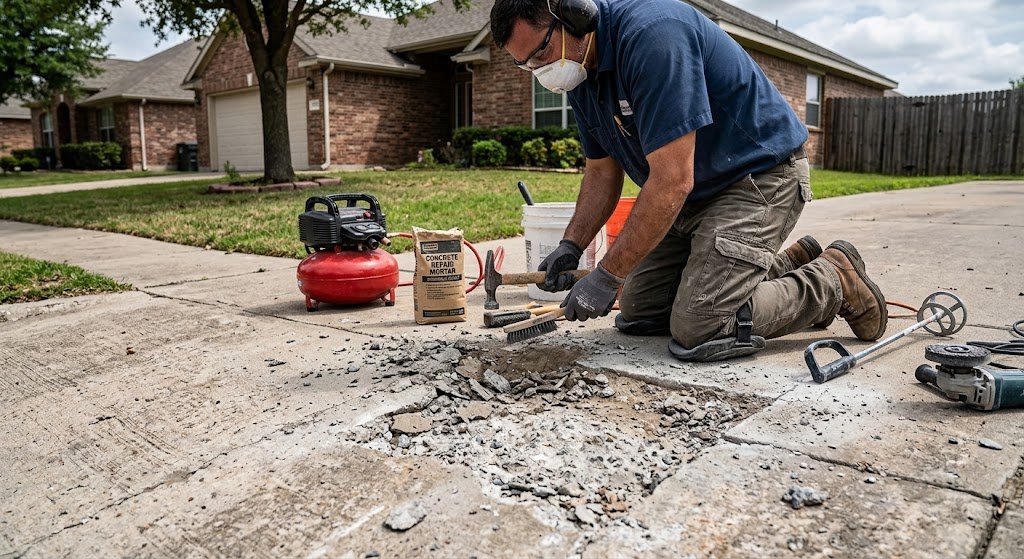
Concrete Spalling Repair | How to Fix Flaking Concrete
To fix spalling concrete, remove all loose material, treat any exposed rebar, apply a bonding agent, fill the area with a polymer-modified repair mortar, cure it properly, and seal the surface. Moreover, you must fix the cause of the damage, or the flaking will return.
What Is Concrete Spalling? Why Your Concrete Flakes and Peels
Spalling happens when the surface of concrete chips, flakes, or peels away. Small pits often appear first. Then larger sections break loose and expose the rough aggregate underneath. Flaking concrete shows up on driveways, patios, garage floors, balconies, parking structures, and foundation walls.
Spalling is more than a cosmetic flaw. Moisture enters the exposed areas, so the damage spreads. Therefore, early repair saves money and protects your property.
What Causes Flaking Concrete? 5 Common Reasons Surfaces Spall
Several factors weaken the surface layer. Knowing them helps you choose the right repair.
- Freeze-thaw cycles: Water seeps into pores, freezes, and expands. As a result, the surface cracks and breaks off.
- Rebar corrosion: Moisture and chlorides rust the steel inside. Rust expands and pushes the concrete outward.
- De-icing salts: Salt draws moisture into the slab and speeds up surface breakdown.
- Poor finishing: Workers who trowel too early or add water to the mix create a weak top layer.
- Heavy impact or fire: Sudden stress or heat can pop chunks off the surface.
Signs You Need Concrete Spalling Repair | 5 Warning Signs Not to Ignore
Act quickly if you notice any of these warning signs:
- Flakes or scales that peel off the surface
- Pits or craters deeper than a quarter inch
- Rust stains or exposed steel bars
- Hollow sounds when you tap the slab
- Cracks that run along the edges of damaged areas
How to Fix Spalling Concrete in 7 Steps | A Complete Repair Guide
Small surface repairs suit a confident DIYer. However, serious or structural damage needs a professional.
Step 1: Mark and Assess the Damage
First, tap the surface with a hammer. Hollow areas signal loose concrete beyond the visible damage. Mark them with chalk.
Step 2: Remove Loose Concrete
Next, use a chisel, grinder, or small jackhammer to cut out all unsound material. Cut square edges at least half an inch deep. Feathered edges crumble, so avoid them.
Step 3: Treat Exposed Rebar
If you find rusted steel, clean it to bright metal with a wire brush. Then coat it with a rust-inhibiting primer. Also, remove enough concrete behind the bar so the repair material can wrap around it.
Step 4: Clean and Prepare the Surface
Pressure wash the area to remove dust, oil, and debris. Afterward, let the surface dry to a damp, saturated-surface condition. This helps the repair material bond.
Step 5: Apply a Bonding Agent
Brush a bonding agent over the prepared area. In addition, follow the manufacturer’s timing carefully, because the agent must stay tacky when you place the mortar.
Step 6: Fill with Repair Mortar
Mix a polymer-modified repair mortar and press it firmly into the cavity. Then level it with a trowel and match the surrounding texture. For deeper voids, build the repair in layers.
Step 7: Cure and Seal
Keep the patch moist for at least three days. After it cures fully, apply a penetrating sealer. Consequently, the surface resists water, salt, and future flaking.
Repair or Replace? How to Decide
Repair works well when damage stays shallow, and the slab remains structurally sound. In contrast, replacement makes sense when spalling covers most of the surface, the slab has settled, or deep cracks run through it. Furthermore, widespread rebar corrosion often calls for a structural assessment before any cosmetic fix. Concrete resurfacing offers a middle path. A bonded overlay can renew a large, worn surface for far less than a full tear-out.
How to Prevent Concrete Spalling | 5 Habits That Protect Your Surface
Prevention costs less than repair, so build these habits:
- Seal your concrete every two to three years.
- Use calcium magnesium acetate or sand instead of rock salt in winter.
- Fix drainage problems so water never pools on the slab.
- Repair small cracks immediately.
- Hire experienced finishers for new pours.
Why Choose Elite Concrete Restoration Inc. for Concrete Spalling Repair?
DIY patches often fail because they treat the symptom instead of the cause. Elite Concrete Restoration Inc. takes a different approach. Our specialists diagnose the root cause first, whether moisture, rebar corrosion, or a weak mix. Then we match the repair method to your slab, climate, and budget. Moreover, one crew handles the entire job, from inspection and concrete removal to rebar treatment, resurfacing, and sealing. Because we use professional-grade, polymer-modified materials, our repairs bond tightly and last. You get a clear written scope, a straight answer on repair versus replacement, and workmanship we stand behind.
Frequently Asked Questions (FAQs)
What causes concrete to flake and spall?
Freeze-thaw cycles, de-icing salts, rusting rebar, and poor finishing cause most spalling. Water usually drives the damage, so moisture control matters.
Can you repair spalled concrete without replacing it?
Yes. Most spalling responds well to repair if the slab remains structurally sound. Crews remove the damaged layer, patch the area, and seal the surface.
How much does concrete spalling repair cost?
Concrete Costs vary with the size of the damage, the depth, and the need for rebar treatment. A professional inspection gives you an accurate quote. Generally, small patches cost far less than replacement.
How long does a spalling repair last?
A properly prepared and sealed repair can last many years. Longevity depends on fixing the cause, using quality materials, and maintaining the sealer.
Is spalling concrete dangerous?
It can be. Loose chips create trip hazards, and corroding rebar can weaken structural elements such as balconies and parking decks. Therefore, have a professional inspect any spalling on load-bearing concrete.
Can I use a concrete patch from the hardware store?
You can for tiny, shallow flaws. However, standard patching compounds often peel off in deeper or moving areas. Polymer-modified mortars bond better and handle weather much more effectively.
When is the best time to repair flaking concrete?
Repair in mild, dry weather, ideally between 50°F and 85°F. Moreover, avoid pouring or patching right before a freeze, since fresh material needs time to cure.
Get Your Concrete Fixed Before the Damage Spreads
Flaking concrete only gets worse with time. Don’t wait for a small problem to become a costly replacement. Contact Elite Concrete Restoration Inc. today to schedule your inspection and get a clear, honest repair plan. Call us or request your quote online now.