7 Surprising Benefits of Installing a Retaining Wall on Your Property
Most homeowners think of retaining walls as simple slope-fixers. However, these structures do far more than hold back dirt. In fact, a well-built retaining wall can transform a sloped, unusable yard into a stunning outdoor living space. Below, we’ll explore seven surprising benefits, plus real before-and-after details, practical tips, and honest cost estimates.
1. Prevents Soil Erosion and Water Damage
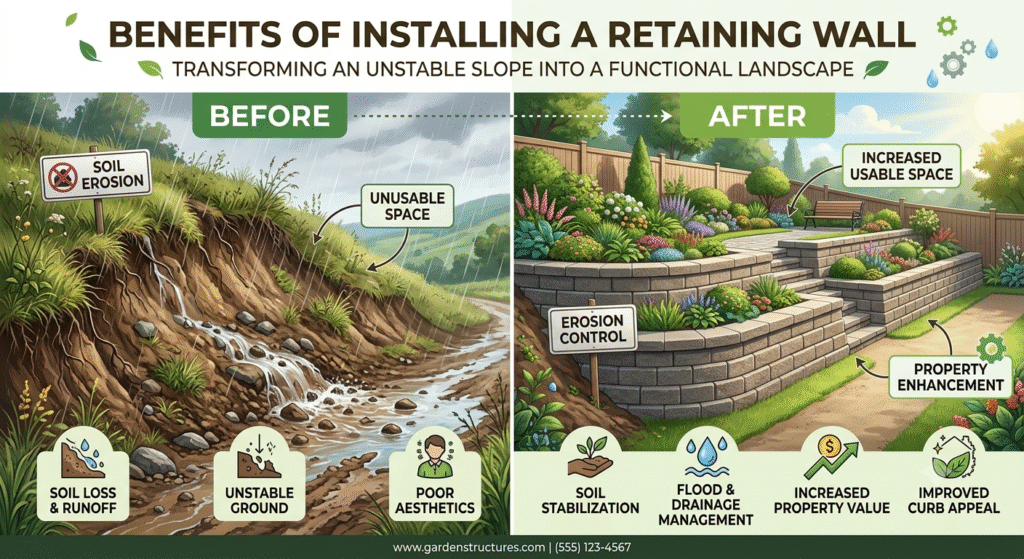
First and foremost, concrete retaining walls stop soil erosion in its tracks. Without one, heavy rain washes topsoil downhill, taking your lawn, plants, and landscaping investment with it. Additionally, erosion can undermine your foundation over time, leading to costly repairs.
Before: A sloped backyard with visible erosion channels, exposed tree roots, and muddy runoff after every storm.
After: A tiered, stable landscape where water flows into designated drainage areas instead of your neighbor’s yard.
2. Creates Usable Flat Space
Consequently, once soil is held in place, you gain flat, usable land where there was once only a steep incline. This means you can finally add a patio, garden bed, fire pit, or play area you never thought possible. As a result, homes with awkward slopes suddenly gain functional square footage.
Before: 30% of the yard unusable due to a steep grade.
After: A newly leveled terrace hosting outdoor furniture and a vegetable garden.
3. Boosts Property Value
Interestingly, retaining walls consistently rank among the landscaping upgrades that increase resale value. Because they solve drainage problems and add visual structure, buyers view them as a sign of a well-maintained property. Therefore, many real estate agents recommend this upgrade before listing a home.
Tip: Choose natural stone or textured concrete block for the best return on investment, since these materials photograph well and age gracefully.
4. Improves Drainage and Reduces Flooding
Beyond erosion control, retaining walls work alongside drainage pipes and gravel backfill to redirect water away from your home’s foundation. Consequently, basements stay drier, and crawl spaces experience less moisture buildup. Meanwhile, French drains built into the wall base further reduce hydrostatic pressure.
Tip: Always include weep holes or a perforated drain pipe behind the wall; otherwise, trapped water pressure can crack even a well-built structure.
5. Enhances Curb Appeal Instantly
Undoubtedly, a tiered garden bed or a stacked-stone wall along the driveway adds instant visual interest. Rather than a plain grass slope, you get depth, texture, and defined planting zones. Furthermore, layered walls allow for colorful seasonal plantings that catch the eye from the street.
Before: A flat, uninspired grass slope with no focal point.
After: A multi-level garden with layered plants, lighting, and a stone accent wall.
6. Reduces Long-Term Maintenance Costs
Because a retaining wall stabilizes soil, you’ll spend less time and money reseeding washed-out grass, replacing mulch, or repairing eroded pathways. Similarly, less soil movement means fewer cracks in nearby patios or walkways. Over time, this translates into meaningful savings on landscaping upkeep.
Tip: Schedule an annual inspection to check for bulging, cracking, or drainage blockages before small issues become expensive repairs.
7. Expands Design and Landscaping Options
Finally, once your slope is tamed, you unlock creative freedom. For instance, you can build terraced vegetable gardens, install built-in seating, or add a water feature that cascades between wall levels. Likewise, retaining walls pair beautifully with outdoor lighting, creating dramatic evening ambiance.
Before: Limited landscaping options due to slope instability.
After: A layered outdoor living space with lighting, seating, and multiple garden zones.
How Much Does a Retaining Wall Cost?
Generally speaking, costs vary based on material, height, and length. Below is a rough breakdown:
Material | Average Cost per Sq. Ft. |
Treated Timber | $20 – $30 |
Concrete Block | $25 – $40 |
Natural Stone | $35 – $60 |
Poured Concrete | $30 – $50 |
Typically, a standard residential wall cost (4 feet tall, 20–30 feet long) costs between $3,000 and $10,000, including labor. Meanwhile, larger or engineered walls exceeding 4 feet often require permits and professional structural design, which increases costs accordingly.
Quick Tips Before You Build
- Check local codes first. Many municipalities require permits for walls over 3-4 feet.
- Hire a structural engineer for taller walls, since improper drainage or footing can lead to collapse.
- Choose materials that match your home’s exterior to maintain a cohesive look.
- Plan drainage before construction begins, not after, to avoid costly rework.
- Consider batter (backward lean) for added stability against soil pressure.
Frequently Asked Questions (FAQs)
Q: How long does a retaining wall last?
A: Depending on material and construction quality, most retaining walls last 25 to 50 years. Poured concrete and natural stone typically outlast timber, which may need replacement after 20-30 years.
Q: Do I need a permit to build a retaining wall?
A: In most areas, yes, if the wall exceeds a certain height (commonly 3-4 feet). Since regulations vary by location, always check with your local building department before starting construction.
Q: Can I build a retaining wall myself?
A: For short walls under 3 feet, many homeowners successfully DIY the project. However, taller walls involve engineering calculations and drainage planning, so professional installation is strongly recommended.
Q: What is the cheapest retaining wall material?
A: Treated timber generally offers the lowest upfront cost. That said, it requires more maintenance and has a shorter lifespan than concrete or stone alternatives.
Q: Will a retaining wall increase my home’s resale value?
A: Yes, in most cases. Because it solves erosion, drainage, and usability issues simultaneously, a well-built retaining wall is viewed as a valuable, permanent improvement by appraisers and buyers alike.
Final Thoughts
Ultimately, a retaining wall offers far more than structural support. From boosting curb appeal to unlocking new landscaping possibilities, this investment pays off in both function and beauty. So, whether you’re battling erosion or simply want more usable yard space, a properly built retaining wall might be exactly what your property needs.