Mudjacking vs Polyurethane Injection Cost | Which Repair Saves You More?
Sunken concrete slabs and settling foundations create serious headaches for homeowners. Fortunately, two popular repair methods, mudjacking and polyurethane foam injection, can lift and stabilize concrete without full slab replacement. However, before choosing either option, you need to understand how their costs, durability, and long-term value compare. This guide breaks down the pricing differences so you can make a confident, budget-friendly decision.
What Is Mudjacking?
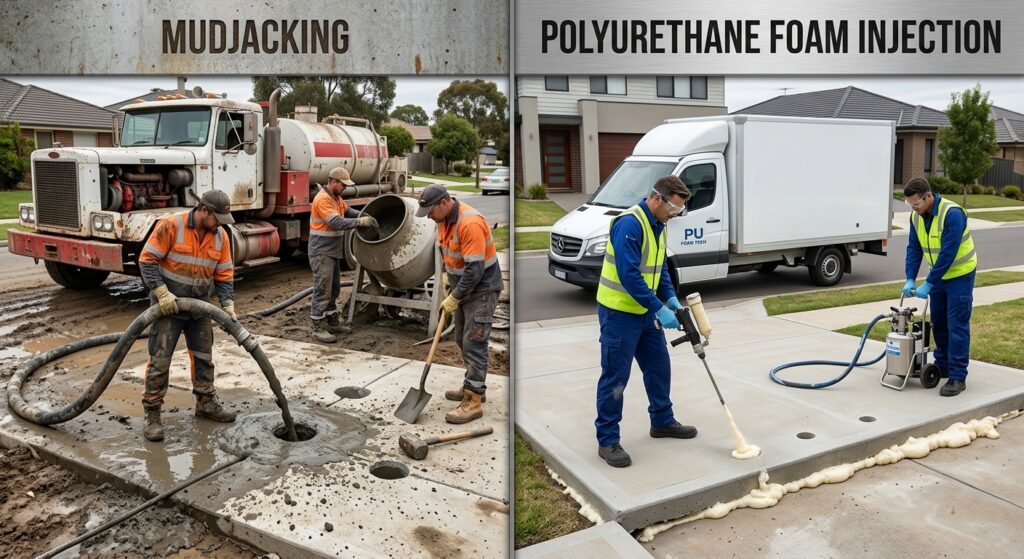
Mudjacking, also called slab jacking, involves pumping a slurry mixture of mud, sand, cement, and water beneath a sunken slab. As the mixture fills the void, it raises the concrete back to its original position. Consequently, this method has been a go-to solution for decades because of its relatively low upfront cost and widespread availability.
What Is Polyurethane Foam Injection?
Polyurethane injection, on the other hand, uses a lightweight, expanding foam instead of a heavy slurry. Technicians drill small holes into the concrete and inject the foam, which then expands within seconds to fill voids and lift the slab. As a result, this method requires smaller holes, less mess, and considerably less curing time than mudjacking.
Comparing the Costs
Mudjacking Cost
Generally, mudjacking costs between $3 and $10 per square foot, making it one of the most affordable slab-lifting options on the market. For a standard driveway or patio project, homeowners typically spend $500 to $1,300 total. Since the material itself is inexpensive, contractors can offer lower rates. Nevertheless, this lower price often comes with trade-offs in longevity and precision.
Polyurethane Injection Cost
In contrast, polyurethane foam injection typically ranges from $5 to $25 per square foot, and crack-specific injections can cost $80 to $800+ per linear foot. Although the upfront price runs higher, the foam’s durability, lighter weight, and resistance to moisture often justify the added expense. Furthermore, many contractors set minimum project fees, often starting around $2,500 for smaller jobs.
Side-by-Side Snapshot
Factor | Mudjacking | Polyurethane Injection |
Cost per sq ft | $3–$10 | $5–$25 |
Material weight | Heavy | Lightweight |
Hole size | 1–2 inches | Dime-sized |
Curing time | 24–48 hours | 15–30 minutes |
Lifespan | 5–10 years | 15–30 years |
Water resistance | Moderate | High (with hydrophobic foam) |
Why the Price Difference Exists
Several factors explain why polyurethane injection generally costs more than mudjacking. First, the foam material itself is more expensive to manufacture and transport. Second, the injection process demands specialized equipment and trained technicians, which increases labor costs. Third, polyurethane foam delivers superior long-term performance, so contractors price it accordingly. Meanwhile, mudjacking relies on cheaper, heavier materials that are widely available, which keeps its price lower but also limits its lifespan.
Long-Term Value | Looking Beyond the Sticker Price
Although mudjacking appears cheaper initially, it often requires repeat treatments within five to ten years, since the heavy slurry can compact soil further and cause the slab to sink again. Therefore, homeowners may end up paying for multiple mudjacking sessions over time. Polyurethane injection, however, tends to hold its lift for fifteen to thirty years because the foam is lightweight and resistant to erosion. Ultimately, when you calculate the cost per year of stability, polyurethane injection frequently proves more economical despite its higher upfront price.
Which Option Fits Your Budget and Needs?
Choosing between these two methods depends on several considerations:
- Budget constraints: If you need an immediate, low-cost fix and don’t mind future maintenance, mudjacking may suit your situation.
- Long-term plans: If you plan to stay in your home for many years, polyurethane injection offers better durability and fewer repeat costs.
- Moisture exposure: Areas prone to water intrusion benefit more from hydrophobic polyurethane foam, since it resists water damage effectively.
- Weight sensitivity: Structures with weak soil beneath them often need the lighter polyurethane foam to avoid adding extra pressure.
Additionally, always request quotes from at least two or three licensed contractors before deciding. This way, you can compare pricing, warranties, and material options accurately.
Final Thoughts
Both mudjacking and polyurethane injection can successfully lift sunken concrete, yet they serve different priorities. Mudjacking wins on affordability, while polyurethane injection wins on longevity and precision. Consequently, your final decision should hinge on your budget, timeline, and how long you expect the repair to last. In short, spending a bit more now on polyurethane foam often prevents costlier repairs later.
Frequently Asked Questions (FAQs)
1. Is polyurethane injection worth the higher cost compared to mudjacking?
Yes, in most cases. Although polyurethane injection costs more upfront, it lasts significantly longer and resists water damage better. Therefore, homeowners often save money over time by avoiding repeat lifting projects.
2. How long does mudjacking typically last before it needs redoing?
Mudjacking generally lasts five to ten years before settling occurs again. However, this timeline can shrink further in areas with poor drainage or expansive clay soil.
3. Does polyurethane injection work on all types of concrete surfaces?
Yes, polyurethane injection works well on driveways, sidewalks, patios, garage floors, and foundation slabs. That said, a professional concrete inspection helps confirm whether your specific surface qualifies for foam lifting.
4. Can I mix mudjacking and polyurethane injection on the same property?
Absolutely. Many homeowners use mudjacking for large, low-priority areas and reserve polyurethane injection for high-traffic zones or moisture-prone sections. This combination approach can balance cost and performance effectively.
5. Why do some contractors charge minimum fees for polyurethane injection?
Because setup, equipment mobilization, and material preparation cost the same regardless of job size, contractors set minimum fees, often around $2,500, to cover these fixed expenses on smaller projects.
6. Does DIY mudjacking or foam injection save money?
Generally, no. Both methods require specialized equipment and technical know-how. Without proper training, DIY attempts often lead to uneven lifting, cracked slabs, or wasted material, which ultimately costs more to fix.