How to Color Concrete | A Simple Guide for Homeowners
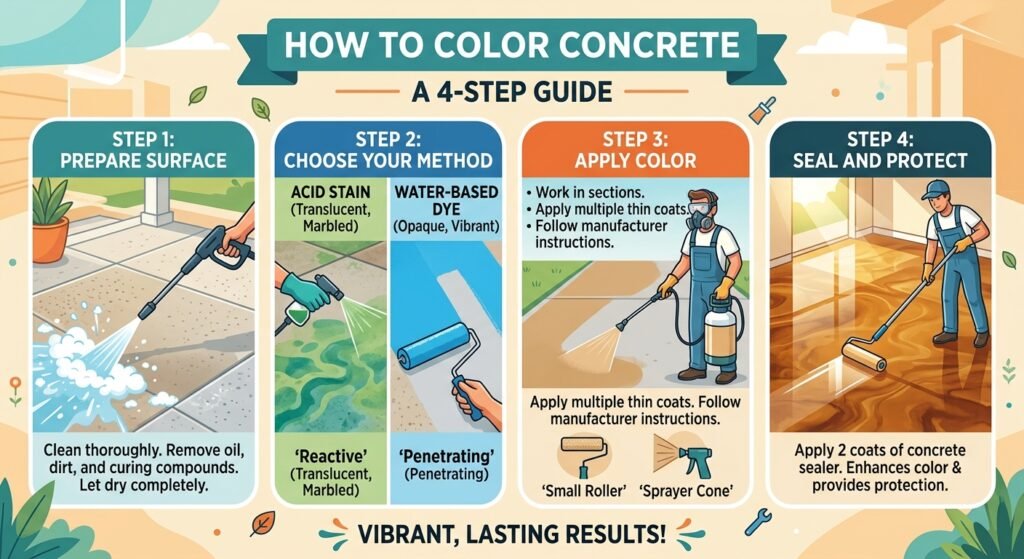
You can color concrete by mixing pigment into fresh concrete or by applying stain, dye, or paint to a cured slab. For existing patios, driveways, and floors, stain or dye usually gives the best mix of beauty and durability. However, the right choice depends on your slab’s age, condition, and location.
Which Method Fits Your Project?
Because every slab is different, you should start by choosing the right method. Here are the four most popular options:
- Integral pigment: You mix color into wet concrete, so the shade runs through the entire slab. Therefore, chips and scratches show less.
- Acid stain: This creates rich, earthy, marbled tones. Also, it reacts with the concrete, so the color becomes permanent.
- Water-based stain or dye: These offer brighter, more consistent colors. Moreover, they work well indoors.
- Concrete paint: This gives you the widest color range. Still, it can peel if you skip surface prep.
How to Color Existing Concrete | Step by Step
Many homeowners want to refresh an old slab instead of replacing it. Fortunately, that goal is very realistic. Follow these steps for a smooth finish:
- Clean the surface. First, remove dirt, oil, and old sealer. Then rinse the slab and let it dry completely.
- Repair damage. Next, fill cracks and patch chips. As a result, your color will look even.
- Test a small area. Because concrete absorbs color differently, always try your product in a hidden corner first.
- Apply the color. Then spray or roll on thin, even coats. In addition, work in small sections to avoid lap marks.
- Neutralize if needed. After the acid stain reacts, rinse with a neutralizing solution. Otherwise, the sealer may not bond.
- Seal the slab. Finally, apply a quality sealer. This step locks in color and protects against water, UV rays, and stains.
How to Color New Concrete
When you pour a fresh slab, you have more options. For example, you can add liquid or powder pigment to the mix. Alternatively, you can broadcast a color hardener over the surface right after floating. In both cases, measure the pigment carefully. Otherwise, batches will vary, and the slab will look patchy. After the pour, cure the concrete properly before you apply any stain or sealer.
Common Mistakes to Avoid
Although coloring concrete seems simple, small errors can ruin the result. Watch out for these problems:
- Skipping the cleaning step, which blocks color absorption
- Applying stain in extreme heat, rain, or direct midday sun
- Using too much product, which causes streaks
- Forgetting the sealer, which lets color fade quickly
Meanwhile, remember that stain looks different on every slab. Consequently, you should never expect a color chart to match perfectly.
How Long Does Colored Concrete Last?
Well-prepared colored concrete can last for many years. However, outdoor slabs face sun, rain, and traffic. As a result, they need fresh sealer every few years. Indoor floors, on the other hand, usually need less upkeep. Therefore, simple sweeping and occasional mopping will keep them looking great.
DIY or Professional | What Should You Choose?
If your slab is small and in good shape, you can often handle the job yourself. Nevertheless, large driveways, cracked patios, and stained garage floors need more skill. In these cases, poor prep leads to peeling, blotches, and wasted money. Hiring a professional protects your time and your investment.
Why Choose Elite Concrete Restoration Inc?
At Elite Concrete Restoration Inc., we focus on restoring what you already have. Instead of tearing out an old slab, we repair it, prepare it, and color it so it looks new again. First, we inspect your concrete and explain its condition in plain language. Then we recommend the best coloring method for your space, budget, and style. Finally, we seal the surface to protect your results. Because we prioritize careful prep, our finishes look even and stay vibrant.
Frequently Asked Questions (FAQs)
Can you color concrete after it has cured?
Yes. You can apply stain, dye, or paint to cured concrete. However, you must clean the slab and remove any sealer first.
What is the best way to color concrete?
It depends on your goal. Integral pigment suits new pours, while stain works best on existing slabs.
Does colored concrete fade?
It can, especially outdoors. Nevertheless, a good sealer and regular maintenance slow fading significantly.
Can you stain a concrete driveway yourself?
You can, but it takes careful cleaning, repair, and even application. Therefore, many homeowners hire a professional for large driveways.
Can you add regular paint to wet concrete?
No. Regular paint weakens the mix and fades quickly. Instead, use pigment made for concrete.
Ready to Transform Your Concrete?
Now you know how to color concrete the right way. If you want expert results without the guesswork, contact Elite Concrete Restoration Inc. today. Our team will assess your slab and share a clear plan. Call or fill out our contact form to request your estimate, and let us bring your concrete back to life.