Epoxy Floor Coating vs. Urethane Coating | Which Is Best for Calgary Garages?
Choosing between epoxy floor coating and urethane coating for Calgary garages is a bigger decision than it looks. Both products protect concrete, but they behave very differently in our climate. This guide compares them directly, so you can pick the right system and avoid paying twice.
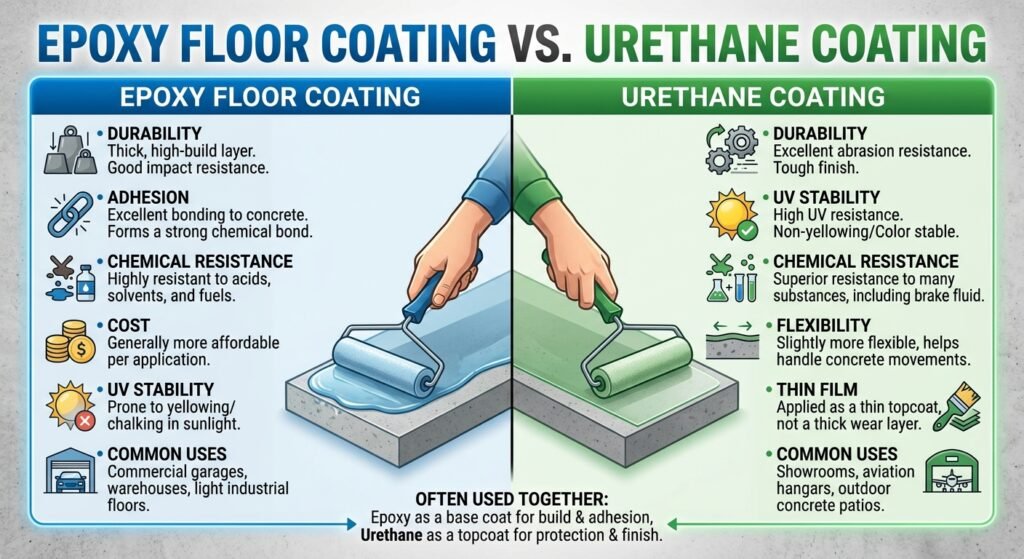
Epoxy builds a thick, strong base. Urethane adds UV stability, flexibility, and scratch resistance. Therefore, an epoxy base with a urethane topcoat gives most Calgary garages the best result.
Why Calgary Garage Floors Need Special Protection
Calgary garages face harsh conditions. Temperatures swing from -30°C to chinook-driven thaws within days. Meanwhile, cars drip salt, magnesium chloride, and meltwater onto bare concrete. Moisture then seeps into the slab, freezes, and cracks the surface. Consequently, untreated floors dust, stain, and spall quickly.
What Is Epoxy Floor Coating?
Epoxy is a two-part resin and hardener that bonds to concrete and forms a hard, thick layer. It fills minor imperfections, resists oil and chemicals, and creates a seamless surface. However, standard epoxy yellows under UV light and can turn brittle in extreme cold.
What Is Urethane (Polyurethane/Polyaspartic) Coating?
Urethane coatings include polyurethane and polyaspartic, a fast-curing type. They apply thinner than epoxy, yet they resist abrasion, UV rays, and hot-tire pickup. Moreover, they flex slightly as concrete expands and contracts. As a result, they handle Calgary’s freeze-thaw cycles well.
Epoxy vs. Urethane | Head-to-Head Comparison
Feature | Epoxy | Urethane |
Thickness | Thick, high-build | Thin film |
Scratch resistance | Moderate | Excellent |
UV stability | Yellows over time | Stays clear |
Flexibility in cold | Lower | Higher |
Chemical resistance | Excellent | Very good |
Cure time | 24–72 hours | A few hours (polyaspartic) |
Cost | Lower | Higher |
Which Performs Better?
Urethane wins on UV stability, scratch resistance, and cold-weather flexibility. Epoxy, in contrast, wins on build thickness, concrete bonding, and price. Neither product wins every category. Therefore, the strongest answer combines them.
The Best Option | Epoxy Base + Urethane Topcoat System
A hybrid system gives you both strengths. First, a primer and epoxy base layer bond to the concrete and hide flaws. Next, decorative flakes add grip and colour. Finally, a urethane topcoat seals everything against salt, UV, and wear. Additionally, this layered approach extends the floor’s lifespan and keeps the finish glossy through many Calgary winters.
Cost Comparison for Garages
Prices vary by garage size, concrete condition, and finish. As a rough guide, epoxy alone often costs less per square foot than a full urethane system. Likewise, the hybrid system sits in the middle to upper range. Even so, it usually saves money over time because it resists peeling and recoating. For an exact figure, request a free on-site quote.
Installation Process and Cure Time
Professional installation follows clear steps:
- Grind the concrete to open the pores.
- Repair cracks and pits.
- Apply primer and the epoxy base coat.
- Broadcast flakes, if desired.
- Seal with a urethane topcoat.
Most hybrid installations take two to three days. Epoxy needs about 24 hours before light foot traffic, whereas polyaspartic topcoats cure within hours. Wait roughly 72 hours before driving on the floor. Full chemical cure takes longer, so avoid heavy loads for about a week.
Durability and Maintenance Tips
A quality system lasts many years with basic care. To protect it:
- Sweep weekly and mop with mild, pH-neutral cleaner.
- Rinse off road salt after every snowstorm.
- Wipe oil and chemical spills promptly.
- Use a soft-bristle brush or microfiber mop, never abrasive pads.
- Place mats under jack stands and heavy tool chests.
How to Choose the Right Coating for Your Garage
Match the coating to how you use the space. If you park daily and want a showroom look, choose the hybrid system. If you work on a tight budget in a rarely used garage, epoxy alone may suffice. Similarly, if your garage gets direct sunlight through windows, prioritize a urethane topcoat. Also consider whether you want a quick return to service, because polyaspartic cures fastest.
Why Hire a Local Calgary Flooring Contractor
A local contractor understands our slabs, our salt, and our freeze-thaw cycles. Furthermore, local crews know how to adjust products for cold garages and can time installs around the weather. They also stand behind their warranty close to home. Look for proper concrete grinding, moisture testing, and transparent written quotes. Our crews at Elite Concrete Restoration use a grind-and-seal process built for Calgary winters, and we back every install with a workmanship warranty.
Signs Your Calgary Garage Floor Needs a Coating
Watch for these warning signs:
- Dusty, powdery concrete
- Oil stains and salt marks that won’t wash out
- Hairline cracks or flaking surface
- Puddles that linger after snowmelt
- Peeling paint or a worn old coating
Concrete Condition Matters More Than the Coating
Even the best product fails on poor prep. Moisture, oil contamination, and weak concrete cause most peeling problems. Therefore, a professional should test moisture levels and grind the surface mechanically. Acid etching alone rarely gives a strong enough bond. In short, preparation determines performance more than brand or chemistry.
Epoxy vs. Urethane | Common Myths
Myth: Urethane always beats epoxy. In reality, epoxy builds a stronger base. Urethane works best as the protective topcoat.
Myth: Epoxy peels in cold weather. Peeling usually traces back to moisture and weak prep, not the product itself.
Myth: A coating replaces concrete repair. Instead, a coating needs sound concrete underneath.
Myth: DIY kits match professional systems. Store-bought kits are thinner and bond weaker, so they often fail within a couple of years.
Best Time of Year to Coat Your Garage Floor
Late spring through early fall works best in Calgary. During these months, slabs stay warm and dry, which helps coatings bond and cure properly. Nevertheless, a heated garage allows year-round installation. If you want a finished floor before winter, book now, since October temperatures are already dropping.
Frequently Asked Questions (FAQs)
Is epoxy or urethane better for Calgary garages?
Neither alone is ideal. An epoxy base with a urethane topcoat delivers the best strength, UV protection, and winter resistance.
How long does a garage floor coating last in Calgary?
A professionally installed hybrid system typically lasts 10 to 20 years with proper care, depending on traffic and prep quality.
Can I drive on the floor right after installation?
Wait about 72 hours for vehicles. Polyaspartic topcoats may allow earlier foot traffic.
Does road salt damage coated floors?
Quality coatings resist salt well. Still, rinse the floor regularly to prevent buildup.
Will the coating make my garage floor slippery?
Not if you add decorative flakes or an anti-slip additive to the topcoat.
How much does garage floor coating cost in Calgary?
Cost depends on size, concrete condition, and the system you choose. Contact a local contractor for a free, no-obligation quote.
Ready to Upgrade Your Garage Floor?
Don’t let another winter damage your concrete. Elite Concrete Restoration installs durable epoxy and urethane systems built for Calgary’s climate. Call today or request your free quote online to get a floor that looks great and lasts.