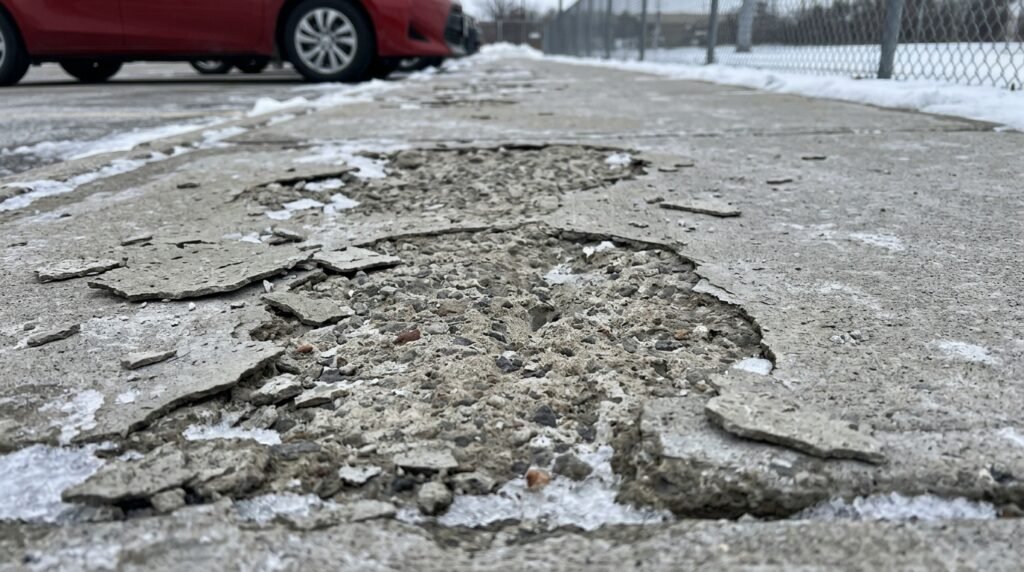
How Snow, Ice, and Moisture Cause Concrete Scaling in Canada
Concrete scaling in Canada frustrates homeowners and property managers every spring. First, a smooth driveway or patio looks fine. Then winter hits, and the surface flakes away in thin layers. Snow, ice, and moisture drive this damage, and de-icing salts speed it up. This guide explains how scaling happens, how to spot it early, and how to stop it. As a result, you can protect your concrete and avoid costly replacements.
Why Canada’s Climate Is Tough on Concrete
Canada’s winters push concrete to its limits. Temperatures swing above and below freezing dozens of times each season, especially in Ontario, Quebec, and the Prairies. Meanwhile, heavy snowfall keeps surfaces wet for months. Moreover, many municipalities spread salt on roads and sidewalks, and that salt ends up on your concrete. Therefore, concrete here needs more protection than concrete in milder regions.
How Moisture Gets Into Concrete
Concrete looks solid, but it contains thousands of microscopic pores. Water enters these pores through rain, melting snow, and standing puddles. In addition, poor drainage lets water sit on the slab for days. Consequently, the concrete absorbs more moisture than it can release. Unsealed surfaces absorb the most. Once water settles inside, the freeze-thaw cycle takes over.
The Freeze-Thaw Cycle Explained
Water expands by about nine percent when it freezes. First, moisture fills the pores near the surface. Next, temperatures drop, and the water turns to ice. The ice pushes against the surrounding concrete and creates internal pressure. Then the ice melts, and the pressure releases. However, the damage remains. Each cycle widens the tiny cracks, and eventually the top layer breaks away. That peeling is concrete scaling.
The Role of De-Icing Salts in Concrete Scaling
Salt does not melt ice by itself in a way that harms concrete, but it changes how moisture behaves. First, salt lowers the freezing point of water, so more freeze-thaw cycles happen on a single winter day. Second, salty water holds more moisture near the surface. Third, salt creates stress as the solution freezes. Because of this, salted slabs scale far faster than untreated ones. Therefore, de-icing products rank among the biggest threats to Canadian driveways, steps, and parking lots.
Common Causes That Make Scaling Worse
Several mistakes make scaling worse. For example, these problems often appear together:
- Non-air-entrained concrete: Air bubbles give expanding ice room to move. Without them, the surface cracks.
- Poor finishing: Overworking the surface brings water to the top and weakens it.
- Early salt exposure: Fresh concrete needs at least one full winter, and ideally 28 days of curing, before salt contact.
- Low-quality mixes: A high water-to-cement ratio leaves more pores.
- Poor drainage: Flat slabs trap water.
- No sealer: Bare concrete absorbs moisture freely.
Early Signs of Concrete Scaling
Catch scaling early, and repairs stay simple. Watch for these warning signs:
- Rough, sandy patches on the surface
- Thin flakes or chips, usually less than a centimetre deep
- Exposed gravel or aggregate
- Discoloured or dull spots where the cement paste wears away
- Hairline cracks that collect water
Additionally, look closely in early spring, right after the last thaw. That timing shows you exactly what the winter did.
Why Scaling Is More Than a Cosmetic Problem
Many owners dismiss scaling as an appearance issue. However, the damage goes deeper. First, a rough surface becomes slippery when wet or icy, which raises the risk of falls. Second, exposed pores absorb even more water, so the damage accelerates each year. Third, moisture eventually reaches the steel reinforcement and causes rust. Finally, scaled surfaces lower your property value and curb appeal. In short, small flakes today become structural repairs tomorrow.
How to Prevent Concrete Scaling
Prevention costs far less than repair. Follow these steps:
- Specify air-entrained concrete. Canadian standards recommend it for exterior slabs.
- Let new concrete cure fully. Avoid salt during the first winter.
- Seal the surface. Apply a quality penetrating sealer every two to three years.
- Improve drainage. Slope slabs away from buildings so water runs off.
- Shovel promptly. Remove snow early instead of relying on chemicals.
- Choose safer de-icers. Use sand for traction, or pick calcium magnesium acetate instead of rock salt.
How to Repair Scaled Concrete
Your repair method depends on how deep the scaling goes. For light scaling, clean the surface, remove loose material, and apply a polymer-modified overlay. For moderate damage, grind the surface and resurface it with a bonded topping. If the slab has cracked deeply or lost its structure, concrete replacement makes more sense. Moreover, always seal the finished repair, because bare patches scale again quickly. Because overlays bond best in dry, mild weather, schedule repairs between late spring and early fall.
Conclusion
Snow, ice, and moisture attack concrete from the inside, and de-icing salts multiply the damage. However, you can stop the cycle. Use air-entrained mixes, seal your surfaces, improve drainage, and limit salt. Act at the first sign of flaking, and you will save thousands of dollars.
Ready to protect your concrete before the next freeze? Book a free inspection with our local concrete specialists today. We build and repair surfaces designed specifically for Canadian winters, and we back our work with clear, written estimates.
FAQs
What causes concrete scaling in Canada?
Repeated freeze-thaw cycles, trapped moisture, and de-icing salts cause scaling. Poor mix design and missing sealers make it worse.
Can scaled concrete be repaired?
Yes. Light to moderate scaling responds well to concrete resurfacing with a polymer overlay. Serious damage may need replacement.
When can I use salt on new concrete?
Wait until the concrete completes its first full winter. Fresh concrete resists salt poorly.
How often should I seal my concrete?
Reseal every two to three years, or sooner if water no longer beads on the surface.
Does scaling mean my concrete will fail?
Not immediately. Nevertheless, untreated scaling spreads and can lead to structural damage over time.