Concrete Patio Coating | Types, Costs, and Benefits
Your patio should feel like an extension of your home. However, cracks, stains, and fading can make even a well-loved outdoor space look tired. Concrete patio coating offers a gentle, affordable way to refresh that surface without a full replacement. In this guide, you will learn about the main coating types, what they cost, and how each one can benefit your home.
What Is Concrete Patio Coating?
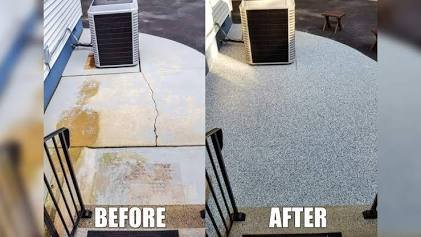
Concrete patio coating is a protective layer that you apply over an existing slab. It seals the surface, hides minor flaws, and adds color or texture. Because it bonds directly to the concrete, it also blocks moisture, oil, and UV damage.
Many homeowners search for this topic because they want a practical answer to one question: “What is the best way to restore my old patio without tearing it out?” Coatings answer that question well. Moreover, they usually finish in a day or two, so you can enjoy your space again quickly.
Types of Concrete Patio Coatings
Each coating offers a different look, lifespan, and price. Therefore, it helps to compare them side by side.
Epoxy Coatings
Epoxy creates a hard, glossy finish that resists stains and abrasion. It works beautifully in covered patios and garages. However, standard epoxy can yellow under direct sunlight, so most professionals recommend it for shaded areas only.
Polyurethane and Polyaspartic Coatings
These coatings handle sun exposure far better than epoxy. Polyaspartic formulas cure fast, and they resist fading, scratching, and temperature swings. As a result, they suit open patios in hot or variable climates.
Acrylic Sealers and Coatings
Acrylic products are the most budget-friendly choice. They enhance color, repel water, and go on easily. Still, they wear down sooner, so expect to recoat every two to three years.
Concrete Overlays and Microtoppings
Overlays add a thin cement-based layer that you can stamp, stain, or texture. They work well for patios with surface damage, such as spalling or heavy cracking. In addition, they let you mimic stone, slate, or brick.
Concrete Stain with Sealer
Stain soaks into the slab and creates rich, earthy tones. A clear sealer then locks in the color. This option gives a natural, translucent look, which many homeowners prefer for a soft, organic style.
Concrete Patio Coating Costs
Prices vary by material, patio size, and surface condition. The ranges below reflect typical U.S. averages for professional installation.
Coating Type | Approx. Cost per Sq. Ft. | Typical Lifespan |
Acrylic sealer | $1 – $3 | 2–3 years |
Concrete stain + sealer | $3 – $7 | 5–7 years |
Epoxy coating | $3 – $9 | 3–5 years |
Polyaspartic/polyurethane | $5 – $12 | 7–10+ years |
Decorative overlay | $4 – $12 | 5–10 years |
What Affects the Final Price?
Several factors shape your quote:
- Surface condition: Cracks, oil stains, and old paint require extra prep.
- Patio size: Larger areas often lower the per-square-foot rate.
- Design choices: Custom colors, patterns, and textures raise costs.
- Slip resistance: Added grit or anti-skid additives increase material use.
- Local labor rates: Prices shift from region to region.
Consequently, a free on-site estimate gives you the most accurate number. Skipping proper prep may save money today, but it often leads to peeling later.
Benefits of Concrete Patio Coating
A quality coating does more than improve appearance. It also protects your investment.
Longer Slab Life
Coatings shield concrete from water, salt, and freeze-thaw cycles. Thus, you reduce the risk of new cracks and surface flaking.
Better Curb Appeal
Fresh color and a clean finish lift your entire outdoor area. Furthermore, an updated patio can raise your home’s perceived value.
Easier Maintenance
Sealed surfaces resist dirt, grease, and mildew. Sweeping and occasional rinsing usually keep them looking clean.
Improved Safety
Textured or anti-slip coatings give better traction in wet weather. This matters for families, kids, and older adults.
Cost Savings Over Replacement
Replacing a slab can cost several times more than coating it. Therefore, concrete coating delivers strong value, especially when the base remains structurally sound.
How to Choose the Right Coating for Your Patio
Start with your patio’s exposure. Full sun calls for UV-stable options such as polyaspartic coatings. Shaded spaces can handle epoxy. Next, consider your style. If you love a natural look, choose stain. If you want a bold pattern, an overlay fits better.
Finally, think about long-term upkeep. A higher upfront cost often means fewer recoats. For that reason, many homeowners choose durable coatings even when cheaper products exist.
Why Choose Elite Concrete Restoration Inc.?
At Elite Concrete Restoration Inc., we treat every patio like it belongs to our own family. Our team blends careful surface preparation with premium, UV-stable materials, so your coating lasts and looks beautiful. We diagnose the slab first, explain your options in plain language, and never push add-ons you do not need.
What sets us apart:
- Diamond grinding and full crack repair before every coating
- Professional-grade products with strong warranties
- Transparent, written quotes with no hidden fees
- Clean, respectful crews who protect your home and landscaping
Ready to renew your outdoor space? Contact Elite Concrete Restoration Inc today for a free, no-pressure patio consultation. We will help you pick the right coating and concrete finish on time.
Frequently Asked Questions
How much does concrete patio coating cost?
Most homeowners pay between $1 and $12 per square foot, depending on the coating type and prep work. Acrylic sealers cost the least, while polyaspartic and decorative overlays cost more but last longer.
How long does a concrete patio coating last?
Lifespan ranges from two to ten years or more. Polyaspartic coatings last the longest, whereas acrylic sealers need frequent recoating.
Can you coat old or cracked concrete?
Yes, in most cases. A professional repairs cracks, grinds the surface, and cleans it first. However, severe structural damage may need repair before coating.
What is the best coating for outdoor patios?
Polyaspartic and polyurethane coatings perform best outdoors because they resist UV rays, moisture, and temperature changes. Stain with a quality sealer also works well for a natural look.
Is concrete patio coating slippery?
It can be, but installers add anti-slip aggregates or textured finishes to improve traction. Therefore, ask for a slip-resistant option if your patio gets wet often.
How long before I can walk on my new patio?
Light foot traffic usually starts within 24 hours. Full use, including furniture, typically begins after two to three days, depending on the product.
Can I apply a patio coating myself?
You can, but results often vary. Poor prep and wrong products commonly cause peeling and bubbling. Hiring a professional protects your time and your investment.
Does coating prevent cracks?
Coatings cannot stop new cracks from forming. Nevertheless, they seal the surface and block moisture, which slows damage.
Final Thoughts
Concrete patio coating gives you a simple, budget-friendly way to protect and beautify your outdoor space. By comparing types, understanding costs, and choosing the right product for your climate, you can enjoy a patio that looks fresh for years. When you want expert guidance, Elite Concrete Restoration Inc. stands ready to help. Reach out today and start planning your patio’s next chapter.