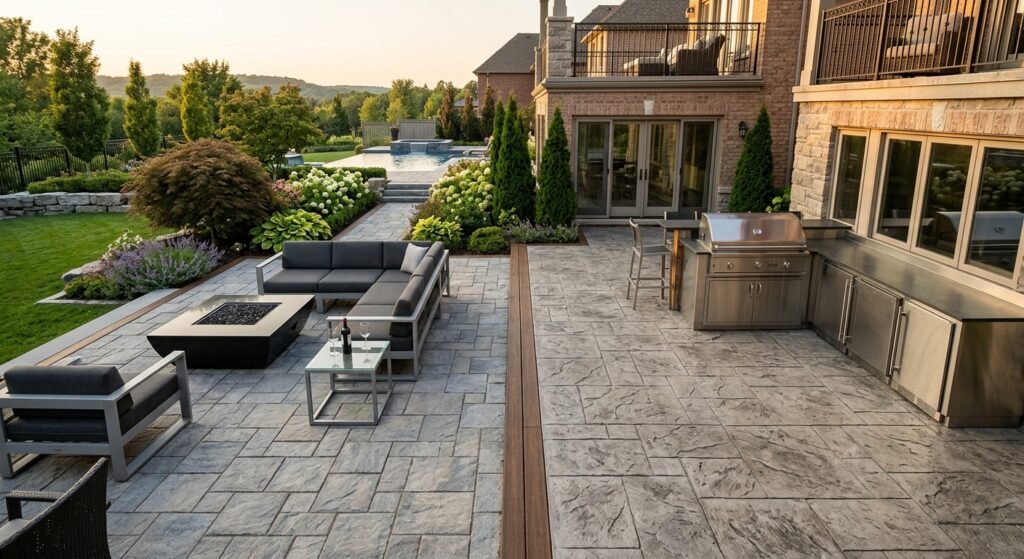
Stamped Concrete vs Pavers | Which Is Best for Your Patio?
Choosing the right material for your patio can feel overwhelming. However, once you understand the key differences between stamped concrete and pavers, the decision becomes much easier. Both options deliver beautiful, durable outdoor spaces, but they differ significantly in cost, installation, maintenance, and long-term performance. Therefore, this guide breaks down everything you need to know before you commit.
What Is Stamped Concrete?
Stamped concrete starts as a poured concrete slab. Afterward, contractors press textured mats into the wet surface to mimic the look of natural stone, brick, slate, or wood. Consequently, homeowners get the elegance of premium materials without the higher price tag.
What Are Pavers?
Pavers, on the other hand, consist of individual units made from concrete, brick, or natural stone. Installers lay them one by one over a compacted base and sand joints. As a result, pavers create a segmented, interlocking surface rather than one continuous slab.
Benefits of Stamped Concrete
- Seamless appearance: Since it’s poured as one slab, stamped concrete offers a smooth, continuous look.
- Design versatility: Contractors can replicate almost any pattern, including cobblestone, flagstone, or wood planks.
- Faster installation: Because there’s no need to place individual units, stamped concrete typically installs quicker than pavers.
- Lower upfront cost: Generally, stamped concrete costs less initially than high-end paver systems.
Benefits of Pavers
- Superior durability: Pavers resist cracking better because each unit moves independently with ground shifts.
- Easy repairs: If one paver cracks or stains, you can simply replace that single unit instead of the entire surface.
- Better traction: Textured, jointed surfaces often provide more slip resistance, especially near pools.
- Long lifespan: With proper care, pavers can last 25–50 years, often outlasting stamped concrete.
Cost Comparison
Cost remains one of the biggest deciding factors for most homeowners. Stamped concrete typically costs between $8 and $18 per square foot, depending on the pattern complexity and color options. Pavers, meanwhile, usually range from $10 to $25 per square foot, since material and labor costs run higher due to individual placement.
Nevertheless, while stamped concrete wins on initial price, pavers often prove more cost-effective over time. Because repairs involve replacing single units rather than resurfacing an entire slab, long-term maintenance expenses tend to stay lower with pavers.
Stamped Concrete vs. Pavers: Direct Comparison
Feature | Stamped Concrete | Pavers |
Upfront Cost | Lower | Higher |
Installation Time | Faster | Slower |
Repair Ease | Difficult (full slab) | Easy (single unit) |
Crack Resistance | Moderate | High |
Lifespan | 15–25 years | 25–50 years |
Design Options | Wide variety of patterns | Wide variety of shapes/colors |
Maintenance | Sealing every 2–3 years | Sand refill, occasional resealing |
Ultimately, stamped concrete suits homeowners who want an affordable, seamless look quickly. Conversely, pavers suit those who prioritize longevity and simple repairs, even though they cost more initially.
Installation Tips for Stamped Concrete
First, ensure the ground is properly compacted before pouring, since a weak base leads to cracking later. Next, apply a high-quality sealer immediately after curing to protect the color and texture. Additionally, work with an experienced contractor, because stamping requires precise timing—the concrete must be firm enough to hold a pattern yet soft enough to stamp cleanly. Finally, consider adding control joints strategically to manage natural cracking and keep it less visible.
Installation Tips for Pavers
To begin, invest in a solid gravel base of at least 4–6 inches, as this prevents shifting and settling. Then, use polymeric sand in the joints, since it locks pavers together and resists weed growth. Moreover, always maintain a slight slope away from your home for proper drainage. Lastly, choose interlocking edge restraints to keep the entire patio structure stable over time.
Repair Tips for Stamped Concrete
Unfortunately, repairing stamped concrete can be tricky because cracks often run through the entire slab. Still, you can minimize damage by sealing the surface every two to three years, which prevents water infiltration and freeze-thaw damage. If cracks do appear, fill them promptly with a flexible concrete crack filler to stop them from spreading. In more severe cases, however, you may need to resurface or replace sections entirely, which increases repair costs significantly.
Repair Tips for Pavers
In contrast, repairing pavers is remarkably simple. Whenever a paver cracks, stains, or sinks, you can lift it out and replace it individually without disturbing the surrounding area. Additionally, refreshing polymeric sand every few years keeps joints stable and weed-free. Consequently, pavers offer a distinct advantage for homeowners who prefer low-hassle, long-term maintenance.
Which One Is Better?
Honestly, the “better” choice depends entirely on your priorities. If you want a budget-friendly, elegant patio installed quickly, stamped concrete makes excellent sense. On the other hand, if you value long-term durability, easier repairs, and don’t mind a higher upfront investment, pavers are the smarter choice. Furthermore, homeowners in areas with harsh freeze-thaw cycles often prefer pavers, since individual units handle ground movement better than a single slab.
Meanwhile, those in milder climates or on tighter budgets frequently choose stamped concrete for its cost efficiency and design flexibility. Either way, working with a licensed, experienced installer significantly improves the final result, regardless of which material you select.
Frequently Asked Questions (FAQs)
Q: Which lasts longer, stamped concrete or pavers?
A: Pavers generally last longer, often 25 to 50 years, because individual units flex with ground movement instead of cracking as one piece.
Q: Is stamped concrete cheaper than pavers?
A: Yes, stamped concrete typically costs less upfront, ranging from 8–18 per square foot compared to 10–25 for pavers.
Q: Can stamped concrete crack easily?
A: While it can crack over time, especially in freeze-thaw climates, proper installation and sealing significantly reduce this risk.
Q: Are pavers easier to repair than stamped concrete?
A: Absolutely. You can replace individual pavers without affecting the rest of the patio, while stamped concrete often requires resurfacing.
Q: Which option adds more resale value?
A: Both add value, but pavers often appeal more to buyers due to their durability and premium appearance.
Q: How often should I reseal stamped concrete or pavers?
A: Both surfaces benefit from resealing every two to three years to maintain color, protect against stains, and extend their lifespan.
Final Thoughts
Both stamped concrete and pavers offer stunning stamped concrete patio solutions, yet they cater to different needs. Consequently, weigh your budget, climate, and long-term maintenance preferences carefully before deciding. Whichever you choose, proper concrete stamped patio installation and regular maintenance will ensure your patio stays beautiful for years to come.