

7 Signs Your Concrete Driveway Needs Replacement, Not Repair
Every concrete driveway eventually reaches a turning point. At first, a small crack or a rough patch seems like a minor annoyance. However, as damage spreads, homeowners often wonder whether a simple repair will fix the problem or whether the entire driveway needs replacement. Making the right call matters because patching a failing driveway wastes money, while replacing a driveway too early wastes a perfectly good surface. So, how do you know which option fits your situation? Below, we break down seven clear warning signs that signal replacement, not repair, is the smarter path forward.
1. Deep, Widespread Cracks
Hairline cracks are normal and usually harmless. In contrast, cracks wider than a quarter-inch, especially those that run through multiple sections, indicate structural failure beneath the surface. Furthermore, if cracks keep reappearing after repairs, the base layer has likely shifted or eroded. Consequently, sealing or patching only masks the problem temporarily. Since the underlying foundation is compromised, replacement becomes the only long-term solution.
2. Uneven or Sunken Slabs
Over time, soil beneath a driveway can erode, wash away, or compact unevenly. As a result, sections of concrete may sink, tilt, or rise unexpectedly. This unevenness doesn’t just look bad; it also creates tripping hazards and drainage problems. Additionally, uneven slabs often point to poor soil compaction during the original installation. Therefore, mudjacking or leveling might offer a short-term fix, but full replacement usually delivers a safer, more permanent result.
3. Potholes and Crumbling Edges
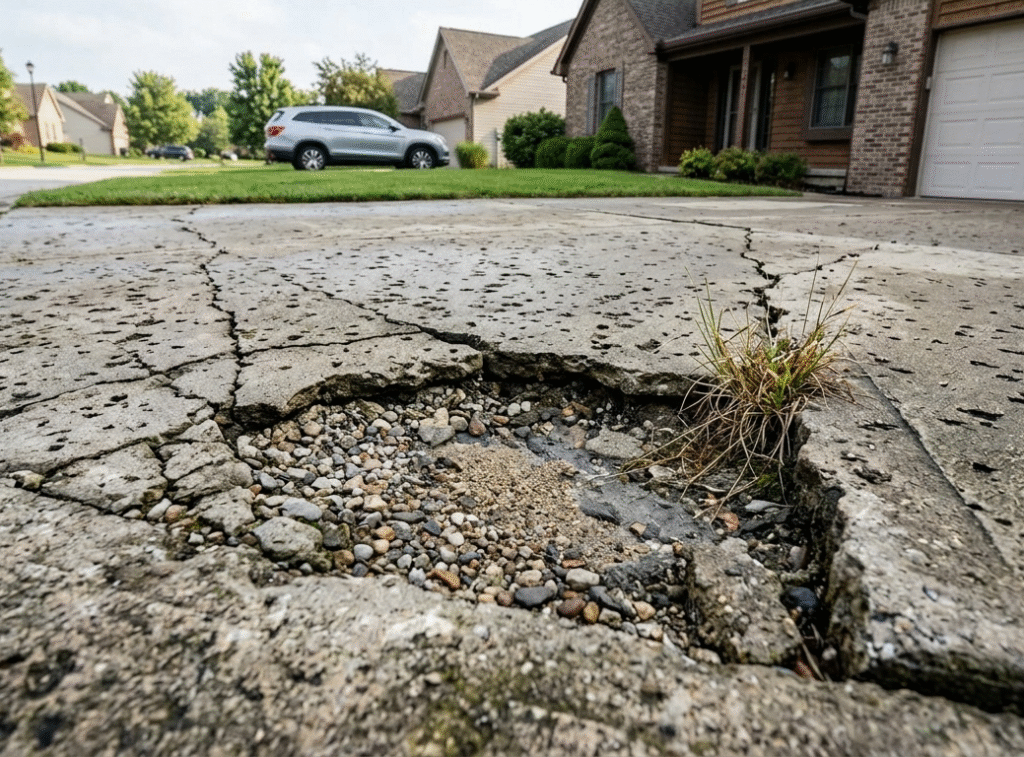
Potholes form when water seeps into cracks, freezes, and expands, breaking the concrete apart from within. Meanwhile, crumbling edges suggest the concrete mix has weakened due to age or poor curing. Once potholes multiply across the driveway, patchwork repairs rarely hold up under vehicle weight. Instead, they tend to fail again within a year or two. In such cases, replacement prevents an endless cycle of costly, temporary fixes.
4. Extensive Surface Scaling and Spalling
Scaling occurs when the top layer of concrete flakes or peels away, often due to freeze-thaw cycles or the overuse of de-icing salts. Similarly, spalling causes chunks of concrete to break off, exposing the aggregate underneath. While minor scaling can sometimes be resurfaced, extensive scaling across most of the driveway signals that the concrete has lost its structural integrity. Consequently, resurfacing won’t restore strength, and full replacement becomes necessary to ensure durability.
5. Drainage Problems and Standing Water
A well-installed driveway sheds water efficiently. On the other hand, a driveway riddled with low spots, cracks, or improper slope allows water to pool after every rain. Over time, standing water seeps into the base, accelerates erosion, and speeds up further cracking. Moreover, persistent moisture can damage your home’s foundation if the driveway slopes toward the house instead of away from it. In this scenario, replacement allows for proper regrading and long-term drainage correction.
6. Visible Reinforcement or Exposed Rebar
If you notice metal rebar or wire mesh poking through the surface, your driveway has reached a critical failure point. This typically happens when cracks widen enough to expose the internal reinforcement, which then rusts and expands, causing even more damage. As such, exposed rebar isn’t a cosmetic issue; it’s a sign of severe structural breakdown. Repair simply cannot restore the compromised reinforcement, so replacement becomes essential.
7. Driveway Age Exceeds 20-25 Years
Concrete driveways typically last between 25 and 30 years with proper maintenance. However, once a driveway approaches or exceeds this age range, the concrete naturally becomes more brittle and prone to failure. Additionally, older driveways often lack modern reinforcement techniques and proper base preparation, making them more vulnerable to cracking and settling. Even if an aging driveway looks stable today, hidden deterioration is likely already underway. Ultimately, replacing an aging driveway proactively saves money compared to reacting after a major failure.
Repair vs. Replacement | How to Decide
So, how do you distinguish a repairable driveway from one that needs full replacement? Generally, if damage is isolated, shallow, and confined to a small area, repair works well. However, if problems span more than 25-30% of the surface, recur after repairs, or involve structural elements like rebar and base soil, replacement offers better long-term value. In addition, consider your driveway’s age, drainage performance, and overall safety before deciding. A professional concrete contractor can also assess the situation and provide a detailed recommendation based on soil conditions and slab thickness.
Frequently Asked Questions
1. How much does concrete driveway replacement typically cost?
Replacement costs vary based on size, thickness, and region, but most homeowners pay between $8 and $18 per square foot. Additional factors, such as removal of the old slab and regrading, can increase the total cost.
2. Can I repair a cracked driveway myself?
Yes, minor cracks can often be filled with a concrete crack filler or epoxy. However, deeper structural cracks usually require professional evaluation to prevent further damage.
3. How long does a new concrete driveway last?
With proper installation and maintenance, a new concrete driveway typically lasts 25 to 30 years. Regular sealing and prompt crack repair can extend this lifespan even further.
4. Is it cheaper to repair or replace a driveway?
Repairs cost less upfront, but repeated repairs on a failing driveway often exceed the cost of one-time replacement. Therefore, evaluating long-term value matters more than short-term savings.
5. What causes a concrete driveway to fail early?
Poor soil compaction, inadequate reinforcement, improper curing, and excessive de-icing salt use are common causes of early failure. Additionally, heavy vehicle loads beyond the driveway’s design capacity can accelerate damage.
6. Does weather affect whether I should repair or replace?
Yes, freeze-thaw cycles significantly impact concrete durability. In colder climates, driveways experience more scaling, spalling, and cracking, which often shortens their functional lifespan.
Final Thoughts
Ultimately, recognizing these seven signs early helps you make an informed, cost-effective decision. While minor imperfections rarely require replacement, widespread cracking, sinking slabs, exposed rebar, and persistent drainage issues clearly indicate deeper structural problems. Therefore, consulting a qualified concrete contractor ensures you choose the right solution the first time, saving both time and money in the long run.