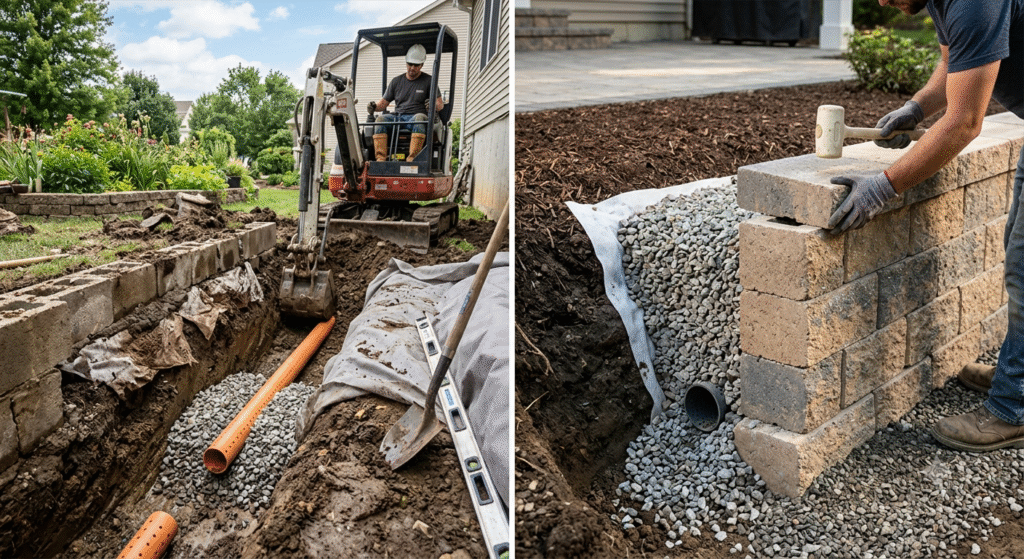
How to Remodel a Retaining Wall | Expert Tips
A retaining wall plays a crucial role in supporting soil, preventing erosion, and enhancing landscape aesthetics. However, over time, weather exposure, soil pressure, and aging materials can weaken the structure. Therefore, remodeling a retaining wall not only improves its appearance but also strengthens its functionality and extends its lifespan.
In this guide, you will learn how to remodel a retaining wall efficiently while ensuring durability, safety, and visual appeal.
Why Remodel a Retaining Wall?
Before starting the project, it is important to understand the benefits of remodeling your retaining wall.
- Improves structural stability
- Enhances curb appeal
- Prevents soil erosion
- Increases property value
- Corrects drainage issues
- Extends the wall’s lifespan
Moreover, retaining wall remodeling costs significantly less than a complete replacement when the foundation remains stable.
Signs Your Retaining Wall Needs Remodeling
You should inspect your wall carefully before planning renovations. Common warning signs include:
- Cracks in blocks, concrete, or stones
- Leaning or bulging sections
- Poor drainage behind the wall
- Soil washing out through joints
- Loose or displaced blocks
- Surface discoloration and weather damage
If you notice several of these issues, remodeling becomes necessary to avoid larger structural problems.
Assess the Existing Wall
First, evaluate the wall’s condition. Check the foundation, drainage system, materials, and surrounding soil.
Look for:
- Foundation settlement
- Water accumulation
- Rotting timber
- Rusted reinforcements
- Damaged masonry units
Additionally, determine whether you can repair the existing structure or need partial reconstruction.
Create a Remodeling Plan
Next, develop a detailed plan. Decide whether you want to:
- Replace damaged sections
- Upgrade materials
- Add decorative features
- Improve drainage
- Increase wall height
Furthermore, check local building codes. Many municipalities require permits for retaining walls above specific heights.
Remove Damaged Materials
Once planning is complete, remove compromised components.
Use appropriate tools such as:
- Pry bars
- Shovels
- Hammers
- Masonry saws
- Wheelbarrows
Carefully dismantle cracked blocks, rotten wood, or loose stones. At the same time, preserve reusable materials whenever possible to reduce project costs.
Improve Drainage Systems
Drainage remains one of the most important aspects of retaining wall remodeling. Without proper drainage, hydrostatic pressure builds behind the wall and causes failure.
To improve drainage:
- Install perforated drain pipes
- Add gravel backfill
- Use drainage fabric
- Create weep holes if necessary
As a result, water moves away from the wall efficiently and reduces structural stress.
Strengthen the Foundation
A strong foundation supports the entire structure. Therefore, inspect and reinforce the base before rebuilding.
For most retaining walls:
- Excavate unstable soil
- Add compacted crushed stone
- Ensure a level base
- Compact in layers
Consequently, the remodeled wall gains greater stability and longevity.
Install New Facing Materials
Now comes the visual transformation. Depending on your budget and design goals, choose materials such as:
Concrete Blocks
Concrete blocks offer durability, affordability, and easy installation. Additionally, they come in various textures and colors.
Natural Stone
Natural stone creates a premium appearance. Although it costs more, it delivers exceptional durability and timeless beauty.
Brick Veneer
Brick veneer enhances aesthetics while maintaining structural support from the existing wall.
Timber Panels
Timber provides a natural look. However, choose pressure-treated lumber to resist moisture and insects.
Add Reinforcement
For taller retaining walls, reinforcement becomes essential.
Common reinforcement options include:
- Geogrid layers
- Steel reinforcements
- Anchor systems
- Concrete footings
Furthermore, reinforcement distributes soil pressure evenly and prevents future movement.
Backfill Properly
After rebuilding the wall, backfill the area correctly.
Follow these guidelines:
- Place gravel directly behind the wall.
- Compact soil in layers.
- Avoid oversized rocks.
- Maintain proper drainage channels.
Proper backfilling significantly improves structural performance.
Upgrade the Appearance
A remodeling project offers an excellent opportunity to improve visual appeal.
Consider adding:
- Capstones
- Decorative lighting
- Planters
- Water features
- Landscaping elements
- Seating walls
As a result, the retaining wall becomes both functional and attractive.
Perform Final Inspection
Finally, inspect the completed wall thoroughly.
Check for:
- Level alignment
- Stable joints
- Effective drainage
- Proper compaction
- Structural integrity
Additionally, monitor the wall during heavy rainfall to confirm that drainage systems perform correctly.
Cost of Remodeling a Retaining Wall
Several factors influence remodeling costs:
- Wall size
- Material type
- Drainage upgrades
- Labor expenses
- Reinforcement requirements
- Site accessibility
Small remodeling projects may cost a few hundred dollars, whereas extensive renovations can reach several thousand dollars. Nevertheless, investing in quality materials often reduces future repair expenses.
Conclusion
Remodeling a retaining wall enhances both structural performance and landscape beauty. By assessing the wall, improving drainage, reinforcing the foundation, and installing durable materials, you can create a long-lasting solution that withstands soil pressure and environmental conditions. Moreover, regular maintenance and inspections help preserve the wall’s strength for many years.
FAQs
How often should a retaining wall be remodeled?
Most retaining walls benefit from inspection every year. However, remodeling becomes necessary when you notice structural damage, drainage problems, or significant wear.
Can I remodel a retaining wall myself?
Yes, you can handle small remodeling projects yourself. However, large walls or structurally damaged walls often require professional assistance.
What is the best material for a remodeled retaining wall?
Concrete blocks and natural stone are among the most durable options. Nevertheless, the best choice depends on your budget, design preferences, and site conditions.
Do retaining walls need drainage systems?
Yes. Proper drainage prevents water buildup behind the wall and reduces pressure that could cause failure.
How long does a remodeled retaining wall last?
A properly remodeled retaining wall can last 30 to 100 years, depending on materials, construction quality, and maintenance practices.
Is a permit required to remodel a retaining wall?
Permit requirements vary by location. Therefore, always check local building regulations before beginning the project.